practice and challenge
May 17 2016
May 17 2016
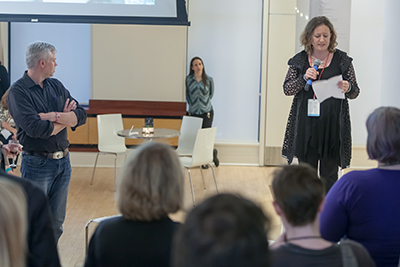
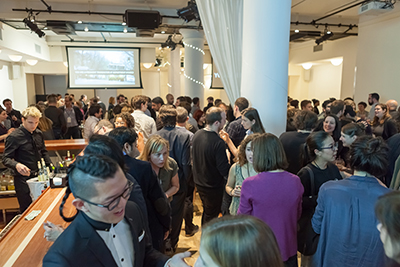
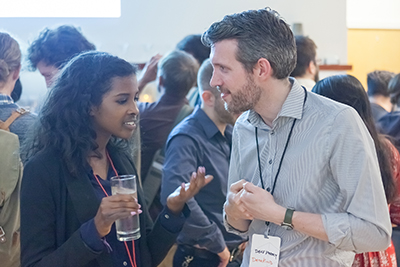
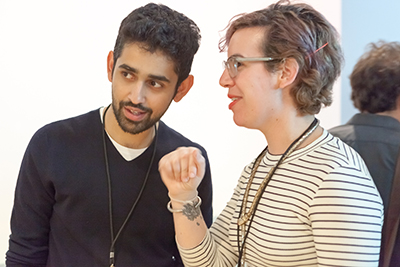
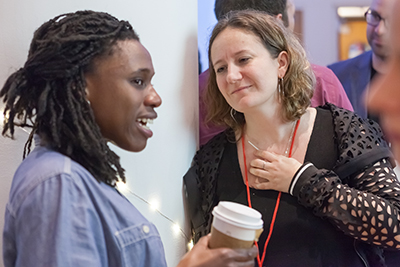
On May 17, 2016, a year and a half after Data & Society’s official launch event in NYC, we gathered the D&S community together for a conference on the dilemmas and prospects of practicing tech in a data-soaked world.
“Data & Society: Practice and Challenge” brought together D&S researchers, friends, and family to hear from doers, investors, journalists, activists — people involved from different angles in the practice of technology — about what they are working on and, importantly, why. We heard about the challenges they face in thoughtfully building the sociotechnical world of today and tomorrow.
Speakers
danah boyd
Founder, Data & Society Research Institute
Mandy Brown
Director of Publishing, Vox Media
Cindy Cohn
Executive Director, Electronic Frontier Foundation
Anil Dash
entrepreneur and activist
Data & Society board member
Nadia Heninger
Assistant Professor, Computer and Information Science, University of Pennsylvania
Kati London
Senior Researcher, Microsoft
Nancy Lublin
Chief Executive Officer, Crisis Text Line
Andrew McLaughlin
Head of Content, Medium
Youngna Park
Head of Product, TinyBop
Claudia Perlich
Chief Scientist, Dstillery
Yancey Strickler
Founder, Kickstarter
Clive Thompson
New York Times Magazine contributing writer, Wired columnist
Claudia Perlich
Ethan Zuckerman
Art Program
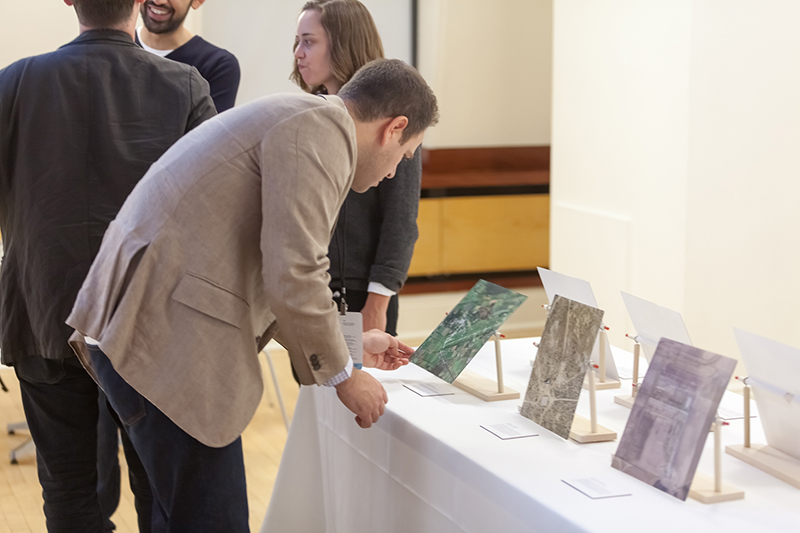
While the vision of the world seen on services like Google Earth is increasingly ubiquitous, it’s also inherently fictional and fragmented–the world viewed from an online satellite map is one in total equipoise, where it is always and forever early afternoon on a cloudless day. It’s a highly political landscape: made up of millions of images, built atop decades of once-secret military aerospace research, and where the landscape is sometimes subtly and sometimes overtly manipulated. These prints offer different ways of seeing some sites tied to and shaped by the aerial perspective.
Ingrid Burrington writes, makes maps, and tells jokes about places, politics, and the weird feelings people have about both. She’s currently an artist-in-residence at Data and Society Research Institute and a fellow at the Experimental Research Lab at Autodesk/Pier 9. Networks of New York, her field guide to internet infrastructure, will be published by Melville House this summer.
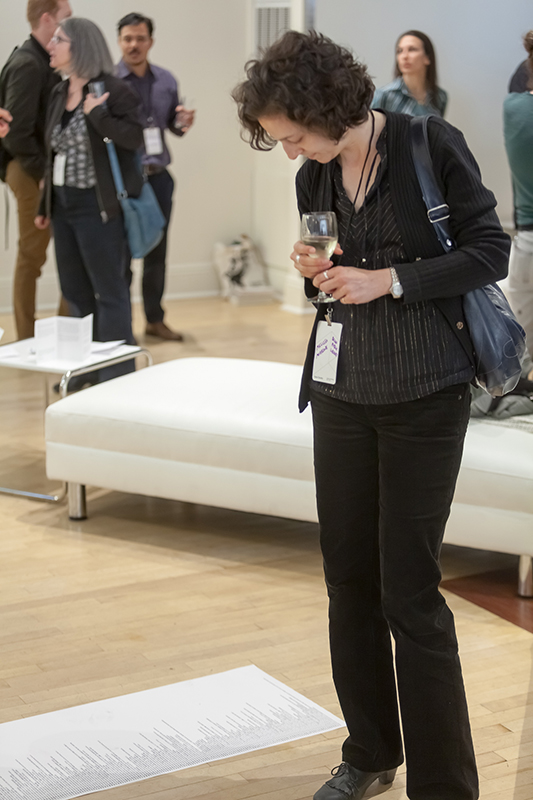
Taxonomy of Humans According to Facebook is two-part piece makes use of target demographic categories available to advertisers on Facebook. Category names, sources and audience sizes were captured from Facebook’s ad-creation page, sorted by size and presented as a massive list. The same data was then used to programmatically generate an endless stream videos by combining different categories with stock footage. In a future iteration of this project, the videos will be served as advertisements on Facebook.
The list encompasses the totality of what Facebook publicly knows (or asserts to know) about their users, with data sourced from a combination of user activity on Facebook and partnerships with third parties.
Sam Lavigne is an artist and programmer based in Brooklyn whose work deals with surveillance, cops, data, and automation. He is currently a research fellow at NYU’s Interactive Telecommunications Program, and a contributing editor at The New Inquiry. He is the co-founder of Useless Press, an online publishing collective, and the co-founder of the Stupid Shit No One Needs and Terrible Ideas Hackathon.
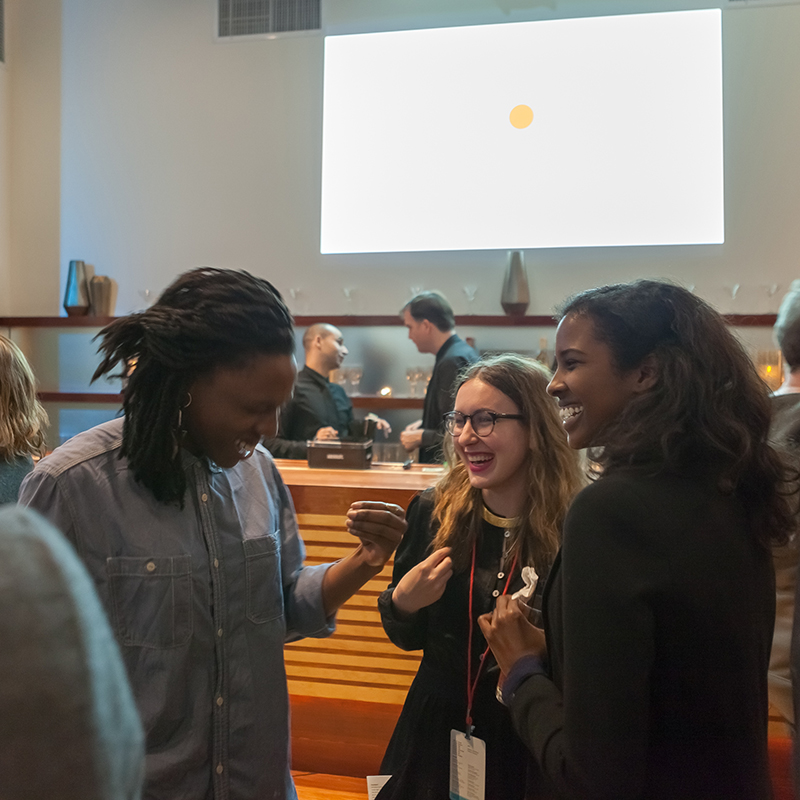
Heart rate data is collected in real-time, then visually and publicly broadcast. Using personal interaction as an interface, Pulse questions the ability of biometric data to reveal, clarify, obscure, and intrude.
Mimi Onuoha is an artist and researcher using data and code to explore new forms of social critique and interaction. She is interested in the strange and real ways people, space, and data overlap with and respond to one another. Recently she served as an adjunct professor at NYU’s Interactive Telecommunications Program and a fellow at Columbia University’s Tow Center for Digital Journalism. She is currently a fellow at Data and Society Research Institute.
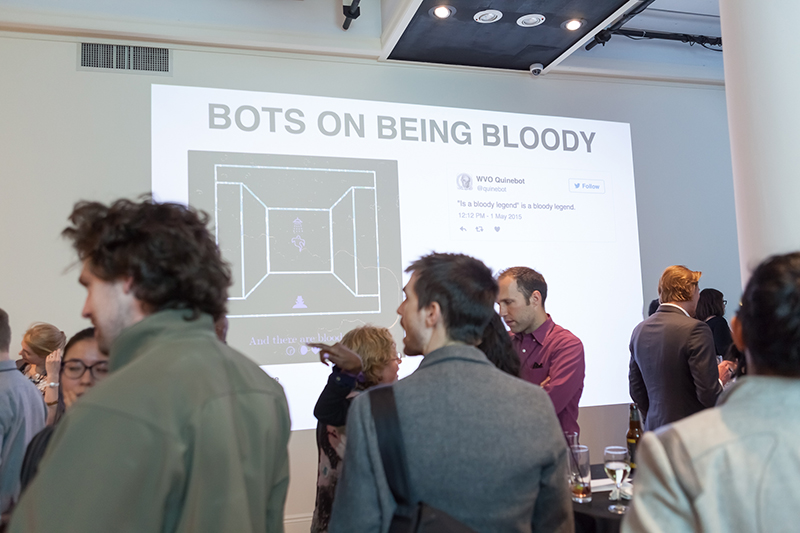
Bots Against Bots finds commonalities among the tweets from a field of Twitter bots on the frontiers of literary practice. Tweets from these bots with common words, meanings, and syntax are shown juxtaposed with one another, pointing out how their approaches to language have uncanny similarities—or amusing differences. The piece includes bots from many leading botmakers, including Ranjit Bhatnagar, Esther Seyffarth, Liam Cooke, Greg Borenstein, Leonard Richardson, Liza Daly, Tyler Callich, Hugo van Kemenade, Katie Rose Pipkin, Martin O’Leary, Zoe Sparks and Neil Freeman.
Allison Parrish is a computer programmer, poet, educator and game designer who lives in Brooklyn. Her teaching and practice address the unusual phenomena that blossom when language and computers meet. She has a masters degree from NYU’s Interactive Telecommunications program and has held fellowships and residencies with the Processing Foundation, the Frank-Ratchye STUDIO for Creative Inquiry at CMU, and Recurse Center in New York City. She was the Digital Creative Writer-in-Residence at Fordham University from 2014 to 2016 and is currently an adjunct professor at ITP, where she teaches a course on writing computer programs that generate poetry.
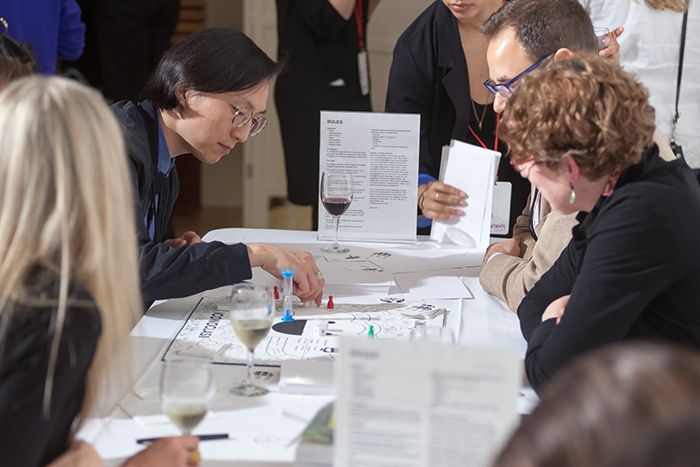
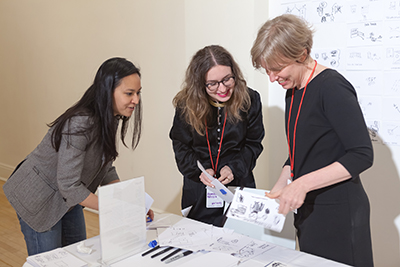
Iconoclasm is a Pictionary-like game that is centered on terms that involve data in some way. Each player has two minutes to draw the term on their card for their teammates to guess. Players are not allowed to draw the visual tropes of 1’s and 0’s, clouds, robots and padlocks. In addition to being fun, family-friendly entertainment, some of the solutions could inspire new icons. Imagine an icon set that could inform the masses about the complexities of all things data.
Iconoclasm was originally presented by Angie Waller and Karen Levy as a workshop for fellows and researchers at Data & Society.
Angie Waller is an artist and designer based in Queens. Her text-based work traverses themes including online communication, art and law, and algorithms that curate art and music. In addition to prints and artist books, she publishes trade paperbacks, ebooks, games and web sites. She produces all web, video and print media for Data & Society.